End to End Process of Accounts Payable
Accounts Payable (AP) is a critical function within the accounting department of any business. It is the process of managing and tracking payments to suppliers or vendors for goods and services purchased on credit. It is an essential component of a company's financial operations that affects its cash flow, profitability, and reputation. The end-to-end process of Accounts Payable includes several steps that must be executed in a timely and accurate manner to ensure that suppliers are paid on time and the company's financial records are accurate.
Maintaining strong vendor relationships, avoiding late payment fines, and preventing fraud all require effective management of the accounts payable process. This article will provide a detailed overview of the end-to-end process of accounts payable, highlighting the critical steps involved in managing vendor payments effectively.
What is Accounts Payable?
Accounts payable is the money a firm owes to sellers for goods or work. It is a debt on the balance sheet and affects cash flow. Good handling helps pay on time, avoid fines, and keep good ties with sellers.
- Shows unpaid bills or invoices for goods or work. These bills must be paid within the set time frame.
- Affects firm trust and seller relations. Late payments can hurt trust and block future deals.
- Helps track firm spending and cash use. Firms can plan cash and avoid extra costs.
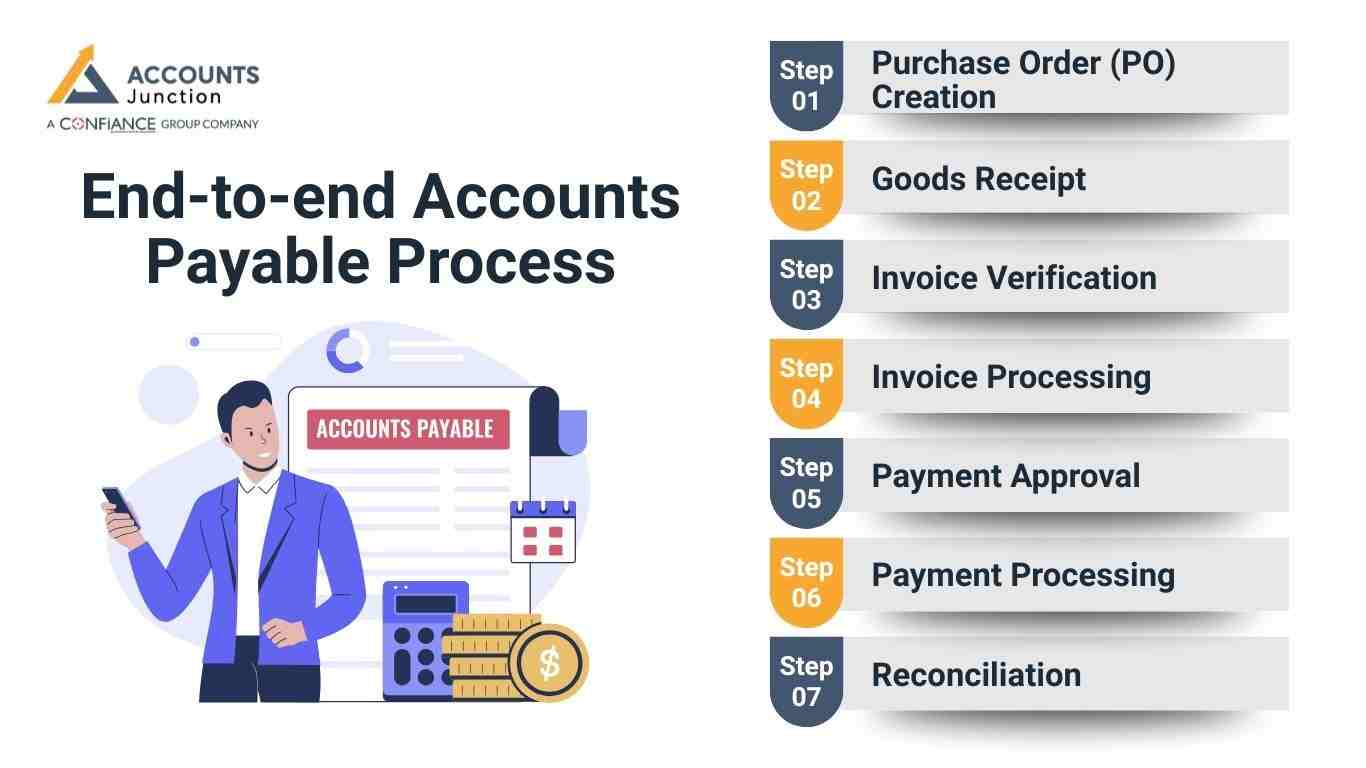
End-to-end Accounts Payable Process
Step 1: Purchase Order (PO) Creation
The first step in the end-to-end Accounts Payable Process is the creation of a purchase order. This is a document that outlines the details of the goods or services being purchased, including the quantity, price, and delivery date. The purchase order is created by the purchasing department and is sent to the supplier for confirmation.
Step 2: Goods Receipt
Once the supplier has confirmed the purchase order, the goods are delivered to the company. The receiving department checks the goods against the purchase order to ensure that everything has been received in good condition and in the correct quantities.
Step 3: Invoice Verification
The supplier will then send an invoice to the accounts payable department. The invoice should match the purchase order and the goods receipt. End-to-end Accounts Payable will verify the invoice details, including the amount owed, the payment terms, and any applicable taxes.
Step 4:- Invoice Processing
Once the invoice has been verified, it is entered into the company's accounting system. This step involves entering the invoice details, such as the invoice number, supplier name, and amount due, into the system. The invoice is then matched against the purchase order and the goods receipt to ensure that everything is correct.
Step 5:- Payment Approval
After the invoice has been processed, the accounts payable department will seek approval for payment. This step involves checking that the payment is within budget and that there are no issues with the invoice. The payment may also require approval from other departments or managers, depending on the company's payment approval process.
Step 6: Payment Processing
Once the payment has been approved, the end-to-end Accounts Payable Process department will process the payment. This may involve issuing a check or initiating an electronic transfer of funds to the supplier's account. The payment will be recorded in the company's accounting system as an accounts payable transaction.
Step 7: Reconciliation
Finally, the accounts payable department will reconcile the payments made to the supplier with the company's financial records. This step involves ensuring that all payments have been made in full and on time, and that there are no discrepancies between the supplier's records and the company's records.
Importance of Timely Payments
Paying bills on time helps grow your business fast. It keeps trust, cash, and the company’s good name.
-
Build Trust with Suppliers
Good supplier ties may give better deals and terms. Trust helps fix problems if delays or mistakes happen.
-
Get Early Payment Discounts
Paying on time may give small discounts from suppliers. Missing them adds cost and wastes company money needlessly.
-
Keep a Good Market Image
Paying on time makes your company look strong. It shows you handle money well to clients and peers.
-
Avoid Extra Costs
Late payments can cause fines or added interest fees. These extra costs can hurt cash and slow growth.
-
Keep a Clear Payment Schedule
A fixed plan stops errors and keeps accounts clear. It makes future spending and cash flow easy to plan.
Role of Simple Tools in Accounts Payable
Tools and software can make work faster and easier. They cut errors and help you track money and bills.
-
Auto Tasks
Daily work can run with little human input now. This stops errors and lets staff work on other tasks.
-
Quick Approvals
Electronic approvals speed up the payment process. Paper forms slow work, while digital steps move quickly.
-
Invoice Tracking
Bills can be saved on a computer for records. Reminders alert staff when payments are due soon.
-
Clear Reports
Software shows money going out and bills left. It helps track unpaid bills and plan cash well.
-
Stop Errors
Manual mistakes drop when using simple tools and forms. This keeps records right and payments correct each time.
-
Easy Audit Checks
Digital logs make audits fast and simple to do. They show proof of payments and keep things clear.
Common Problems in Accounts Payable
Even with rules, mistakes happen in paying bills. Finding issues early lets you fix them fast.
-
Duplicate Bills
Paying one bill twice wastes money for your firm. Checking all bills stops this problem before it grows.
-
Wrong Amounts
Bills may show the wrong number or total. Checking first avoids fights with suppliers and mistakes.
-
Slow Approvals
Slow sign-offs make payments late and cause stress. It can break trust with suppliers and harm deals.
-
Bills Do Not Match Orders
Bill numbers may not match purchase order numbers. This slows work and needs extra time to fix.
-
Poor Supplier Talk
No updates from suppliers can cause payment problems. Talking often keeps bills clear and work moving fast.
-
Weak Work Steps
Bad or unclear steps make payments slow and messy. Simple steps let staff finish work fast and right.
Best Ways to Handle Accounts Payable
Good rules and steps make paying bills easy. They keep suppliers happy and work flowing smoothly.
-
Clear Rules
Say who can pay and what steps to take. Staff then make correct choices without worry or error.
-
Keep Records
Save all bills and payment papers in order. It helps when checking work or solving disputes fast.
-
Fast Approvals
Sign bills quickly to stop delays and stress. It keeps work flowing and suppliers happy each day.
-
Check Often
Match bills to records to find mistakes early. This keeps accounts right and money flowing well.
-
Split Tasks
Give different people different jobs to cut fraud. It keeps everyone responsible for their own work.
-
Talk to Suppliers
Keep in touch with suppliers for help and deals. It helps get discounts or better terms for work.
-
Write Steps Down
Make guides for staff to follow each time. New staff can learn fast and not make errors.
Benefits of a Strong Accounts Payable Process
A well-structured accounts payable process brings many advantages:
-
Improved cash flow and budget control
Businesses can plan costs and avoid cash shortfalls. This keeps money ready for daily work and growth.
-
Reduced errors, fines, and fraud risk
Correct invoice handling cuts mistakes and rule breaches. It also protects funds from fraud or misuse.
-
Better supplier relations and trust
On-time payments build strong ties with suppliers. Trust may lead to better deals and more support.
-
Faster reconciliation and audit reports
Clear records make audits and checks easy. Quick data access helps leaders make better choices.
-
Higher operational efficiency
Simple processes save time and reduce manual work. Staff can focus on key tasks that grow the business.
-
Focus on growth, not admin work
Efficient AP frees staff from repeated routine tasks. Teams can spend time on new projects and plans.
Managing accounts payable well is key for any business. A clear, step-by-step process helps pay suppliers on time, cut errors, and keep cash flow strong. Paying bills on time builds trust, saves money with discounts, and keeps your company’s reputation good. Using simple tools and software makes the work faster, cuts mistakes, and helps track invoices and payments easily. Spotting common issues early and keeping rules clear helps maintain good supplier ties and avoid extra costs.
At Accounts Junction, we know how important it is to have a neat and smooth accounts payable system. Our services help businesses automate invoice work, track payments, and keep clear records. This makes your accounts payable process correct, on time, and stress-free. With Accounts Junction, you can focus on growing your business while we handle the payments and money tasks.
FAQs
1. What is accounts payable (AP)?
- Accounts payable is the work of keeping track of money a business owes to suppliers for goods or services bought on credit.
2. Why is accounts payable important for a business?
- Accounts payable matters because it affects cash, keeps suppliers happy, protects the company’s name, and helps finances stay healthy.
3. What are the main steps in the accounts payable process?
- The main steps are making a purchase order, receiving goods, checking invoices, processing invoices, approving payments, paying, and reconciling accounts.
4. How does purchase order (PO) creation help in accounts payable?
- A purchase order shows the items, amount, price, and delivery date. It helps make orders correct and payments smooth.
5. What is invoice verification in accounts payable?
- Invoice verification checks that the bill matches the purchase order and received goods, including amounts, taxes, and payment rules.
6. Why is timely payment to suppliers important?
- Paying on time builds trust, avoids late fees, may get discounts, and makes the company look strong.