What is the accounting method for contractors?
Accounting for contractors needs a clear method to track finances. Contractors in fields like construction or consulting must choose the right accounting method to manage their finances. The method used impacts taxes, reports, and decisions. This article explains the common accounting methods, their benefits, and how to pick the best one for your business.
Construction companies have some unique characteristics due to the different nature of their work. In this guide, you will get to know a few aspects of contractor accounting and bring efficiency to accounting.
How is the accounting for contractors different?
Contractor accounting is different due to job costs, project prices, and work fees. It needs special methods to track bids, manage wages, and handle costs.
Project-Based Revenue Recognition
- Contractors work on many projects at once.
- Revenue is recorded when a project milestone is met, not when money is paid.
- The accounting method should match the project schedule.
Tracking Job Costs
- Contractors track costs like labor, materials, and equipment.
- By tracking job costs, you can estimate the potential earnings of a project.
- It keeps track of all expenses for accuracy.
Fluctuating Operating Costs
- Costs change from project to project.
- Material prices or worker fees can go up or down.
- The accounting method should help handle these changes.
Complex Payroll Management
- Contractors hire workers or subcontractors for each job.
- Payroll depends on work hours or project stages, making it change often.
- Payroll needs to be tracked for taxes and planning.
Cash Flow Gaps
- Payment terms vary, so contractors may wait for payment.
- Good accounting for contractors helps plan for these gaps.
Tax Reporting and Deductions
- Contractors can deduct business costs from taxes.
- Track tools, materials, and mileage for tax purposes.
- The accounting method must track these deductions.
Complex Contract Management
- Contractors manage many contracts at once.
- Each contract may have its own rules and costs.
- A strong accounting system tracks every project’s money.
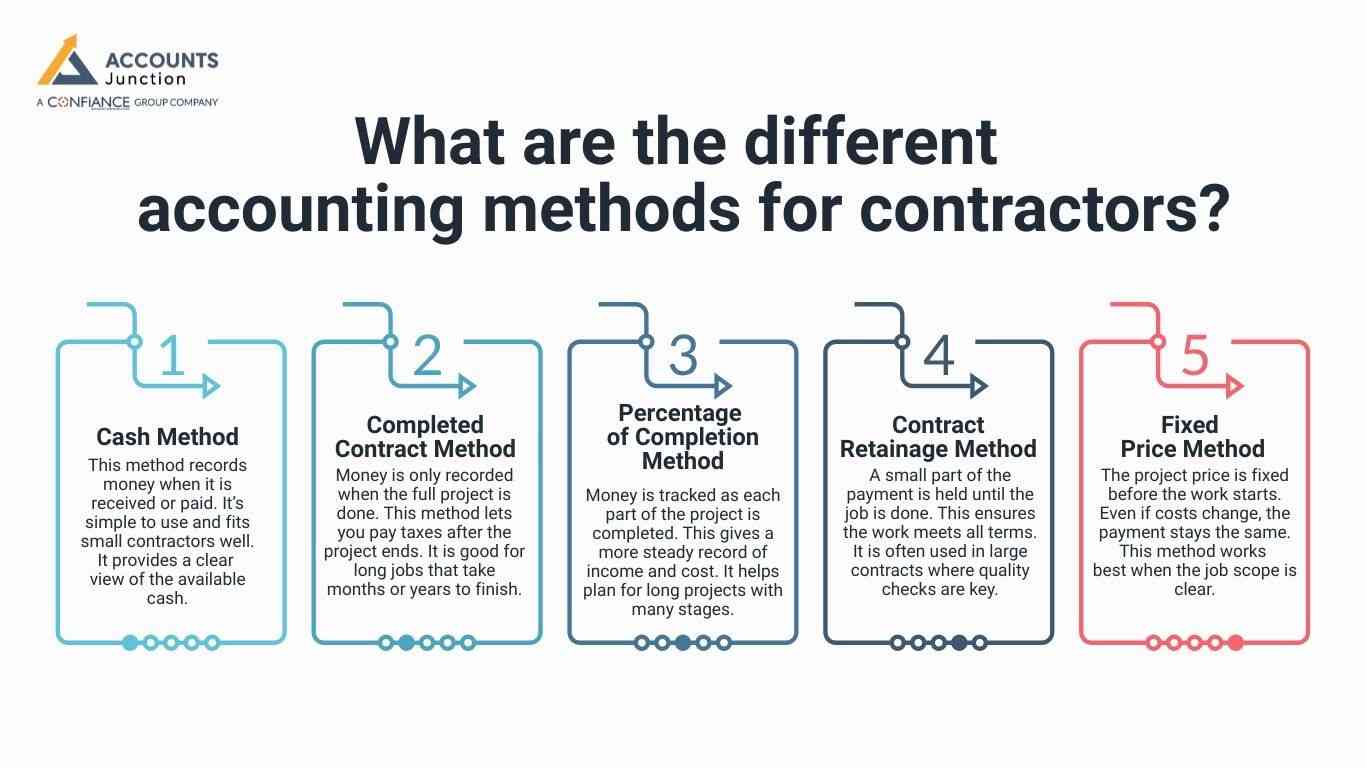
What are the different accounting methods for contractors?
Picking the right way to track money is key in accounting for contractors. The right method helps with tracking income, handling costs, and filing taxes on time. Here are the main options:
1. Cash Method
- This method records money when it is received or paid. It’s simple to use and fits small contractors well. It provides a clear view of the available cash.
2. Completed Contract Method
- Money is only recorded when the full project is done. This method lets you pay taxes after the project ends. It is good for long jobs that take months or years to finish.
3. Percentage of Completion Method
- Money is tracked as each part of the project is completed. This gives a more steady record of income and cost. It helps plan for long projects with many stages.
4. Contract Retainage Method
- A small part of the payment is held until the job is done. This ensures the work meets all terms. It is often used in large contracts where quality checks are key.
5. Fixed Price Method
- The project price is fixed before the work starts. Even if costs change, the payment stays the same. This method works best when the job scope is clear.
Each accounting method for contractors has its pros and fits different types of work. Choosing the best one helps contractors keep clear records, control costs, and follow tax rules with ease.
Which Accounting Method Should Contractors Use?
The best accounting method depends on your project size and how your business works. Below are simple tips to help you choose the right one.
For Small Contractors or Sole Proprietors
- If your work is simple and you get paid quickly, the cash method works well. It is simple to monitor and shows your current cash balance.
For Larger Contractors or Long-Term Projects
- If you take on big jobs or long contracts, use the accrual method. It records revenue when it is earned, not when it is received. This gives a full view of your money and costs.
Hybrid Approach
- Some use both types. For daily work, they use cash. For long jobs, they use accrual. This combined accounting method benefits many contractors.
Common Challenges in Contractor Accounting
Accounting for contractors can be tricky, even with good systems. Here are some key challenges:
1. Managing Multiple Projects
- Keeping track of costs across many projects can get confusing.
- Balancing time and resources for each project can be hard.
2. Fluctuating Costs
- Material prices and labor rates may change quickly.
- Estimating project costs accurately becomes difficult.
3. Payroll Changes
- Handling pay for subcontractors can vary often.
- Mistakes in payroll can lead to delays or disputes.
4. Cash Flow Gaps
- Late payments from clients can affect planning.
- Gaps in cash flow may disrupt operations and project timelines.
Benefits of Accurate Contractor Accounting
Good accounting brings clarity and helps contractors make smart choices. Key benefits include:
1. Better Decision-Making
- Clear records help track spending and profits.
- Helps identify which projects are most profitable.
2. Cost Control
- Prevents overspending and unexpected costs.
- Makes it easier to optimize where money is used.
3. Easier Tax Management
- Accurate records reduce stress during tax time.
- Helps avoid errors and late filings.
4. Access to Funding
- Clear financial reports support loan or investor applications.
- Shows business stability and reliability.
Conclusion: Proper accounting gives confidence, helps plan ahead, and keeps your business strong.
How to bring efficiency in accounting for contractors?
Some tips will be effective in bringing accounting efficiency to the contractors. Here are a few vital tips for bringing an efficient contractor accounting system:
Breaking down the cost as per the project
- Since the project is central to a contractor's business, costs are categorized based on each project's specifics. The revenue and expenses can be easily tracked using the project-based costs. This will allow you to assess the business's performance based on individual projects.
Separating business and personal accounting expenses
- When the business and personal expenses are separated, tracking the expenses and profits becomes simpler. Even if you are a single person working as a contractor without any employees, separating business and personal expenses is advisable. Here, you will need Personal identification, employer identification number, business license copy, etc.
Financial transactions are recorded on a day-to-day basis
- Recording of the financial transactions on a daily basis, at proper places in the accounting books. The record must mainly include the transaction date, description of transactions, and revenue received. A few accounting software also provide invoices as per the contractor's business.
Select the method of revenue recognition
- General business would have revenue recognition simpler, as simply products or services are sold, while contractors would have a different business method. While doing accounting for contractors, methods like the Percentage of completion method, the complete contract method, etc., are some of the methods for revenue recognition.
Using suitable accounting software
- Using suitable accounting software can be more beneficial for contractor accounting. It can automate most of the accounting tasks for the business of contractors.
- These are some important tips for accounting for contractors that can improve the quality. Understanding the contractor's business pattern is essential to bring accounting efficiency.
Tools and Software for Accounting for Contractors
Using software makes accounting for contractors easier. Many tools automate the process. Here are some popular ones:
- QuickBooks: Used to track income, expenses, and payroll.
- Xero: Simple to use for tracking finances and making reports.
- Sage 50: Helps track project costs and manage payroll.
Accounts Junction provides accounting services specifically designed for contractors. We have certified experts with extensive experience in handling contractor accounting. With our expertise, we deliver accurate and efficient financial solutions tailored for contractors. Accounts Junction is a trusted contractor accounting service provider across the globe. Partner with us to manage your contractor accounting efficiently and focus on growing your business.
FAQs
1. What is contractor accounting and why is it important?
- Contractor accounting is tracking income, costs, and project finances. It helps manage cash flow, taxes, and job profitability effectively.
2. How does contractor accounting differ from regular business accounting?
- It focuses on project costs, milestones, and payments. Regular accounting rarely needs such detailed job-level tracking.
3. Which accounting method is best for small contractors?
- Small contractors may benefit from the cash method. It is simple, tracks payments as received, and is easier to manage.
4. Which accounting method works for large construction projects?
- Large projects often use the percentage of completion method. It tracks income and costs as work progresses.
5. Can contractors combine cash and accrual methods?
- Yes, many contractors use cash for small jobs and accrual for long-term projects to balance simplicity and accuracy.
6. What is the completed contract method in contractor accounting?
- Revenue is recorded only after a project is fully finished. It may help postpone taxes until completion.
7. How does contract retainage impact accounting?
- A portion of payment is held until project completion. Accounting must track this for accurate income reporting.
8. How can contractor accounting reduce tax liability?
- By tracking costs like labor, tools, and mileage, contractors can claim deductions. Proper records make tax filing smoother.
9. What are the common mistakes in contractor accounting?
- Mixing personal and business expenses, ignoring project costs, and late updates may cause errors. Awareness prevents issues.
10. How can contractors track project costs efficiently?
- Breaking costs by project and category helps. Accounting software may automate calculations and reports.
11. Why is project-based revenue recognition important for contractors?
- It records income according to milestones or completion stages. This may show a realistic view of earnings.
12. How does contractor accounting handle fluctuating costs?
- Costs like materials or labor may change per project. Proper accounting tracks changes to avoid overruns.
13. How does payroll differ in contractor accounting?
- Payroll may depend on hours, project stage, or subcontractors. Accounting must reflect these variations accurately.
14. Can accounting software help contractor businesses?
- Yes, software like QuickBooks or Xero may track costs, payroll, and project revenue efficiently.
15. How often should contractors update financial records?
- Daily or weekly updates may improve accuracy. Timely records help avoid errors in reporting and planning.
16. How can outsourcing improve contractor accounting?
- Experts may manage bookkeeping, payroll, and taxes. This may save time and reduce errors for contractors.
17. What is the hybrid accounting method for contractors?
- It combines cash and accrual methods. Daily jobs may use cash, while long projects follow accrual accounting.
18. How do contractors choose the right accounting method?
- Choice depends on project size, payment terms, and reporting needs. Matching method to work type improves clarity.
19. Why is separating personal and business accounts crucial for contractors?
- It avoids confusion and makes tax reporting easier. Business performance is clearer when accounts are separate.
20. What tools and software are best for contractor accounting?
- QuickBooks, Xero, and Sage 50 are popular. They may automate cost tracking, payroll, and reporting.