Essential Features to Look for in Accounting Software for Real Estate Developers
When selecting accounting software for real estate developers, it's crucial to consider features that cater specifically to the complexities of the industry. Real estate development involves unique financial transactions, project management requirements, and regulatory considerations. The right accounting software can streamline operations, enhance financial reporting, and improve overall efficiency.
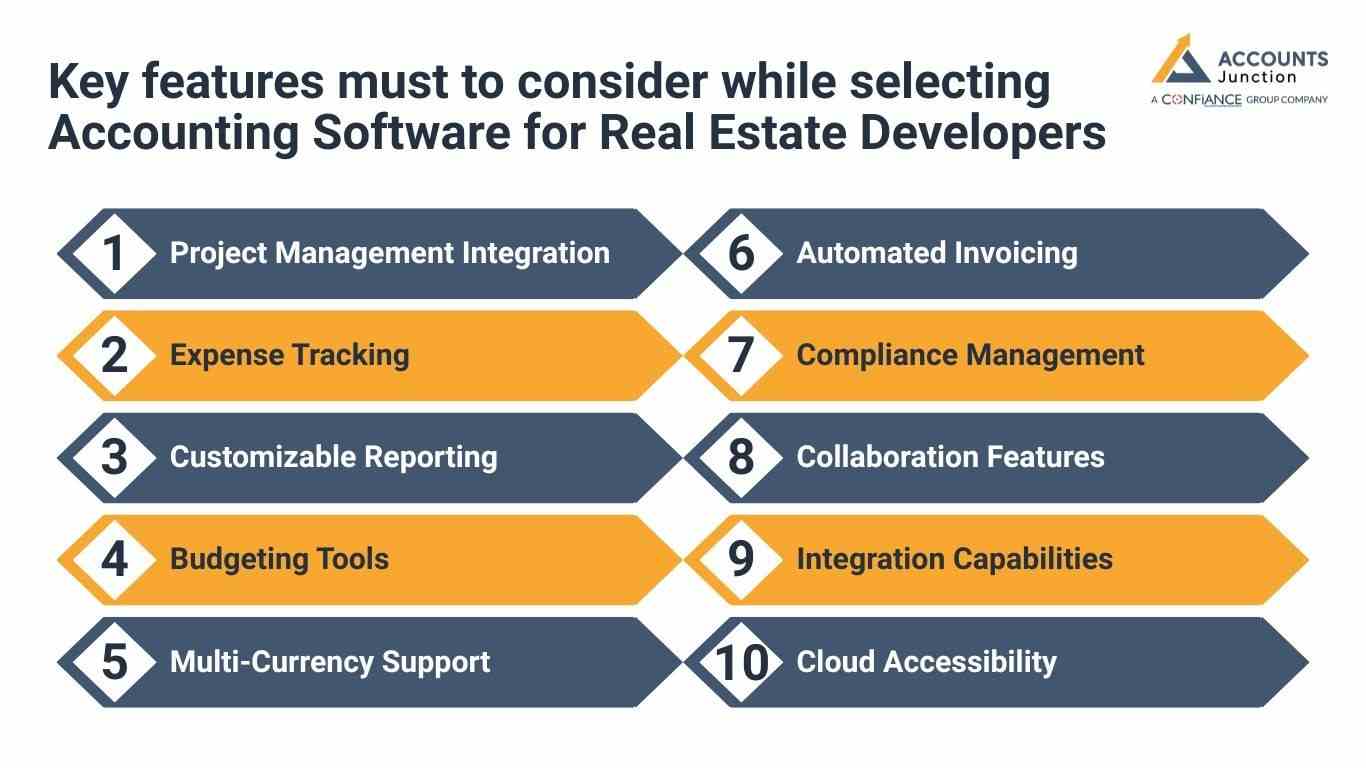
Key features must to consider while selecting Accounting Software for Real Estate Developers
1. Project Management Integration
- A key feature of any effective accounting software for real estate developers is seamless project management integration. This functionality allows users to link financial data directly to specific projects, enabling real-time tracking of expenses, revenues, and overall project budgets. By having a clear view of project financials, developers can make informed decisions and manage resources more efficiently.
2. Expense Tracking
- Detailed expense tracking is vital for real estate developers. The right real estate accounting software should enable users to categorize and monitor all costs associated with their projects, from materials and labor to permits and overhead. This feature ensures that developers stay within budget and can identify areas where costs can be reduced.
3. Customizable Reporting
- The ability to generate customizable reports is a hallmark of effective accounting software for real estate developers. Tailored financial reports allow stakeholders to view the data that matters most to them, whether it’s project profitability, cash flow, or budget variance. Custom reports help in presenting information clearly to investors and partners, fostering transparency and trust.
4. Budgeting Tools
- Comprehensive budgeting tools are essential in real estate accounting software. These tools enable developers to create, manage, and adjust budgets for individual projects easily. Real-time budget tracking allows for proactive adjustments, ensuring that projects remain financially viable and on track.
5. Multi-Currency Support
- For developers engaging in international projects, multi-currency support is a must-have feature in any effective accounting software for real estate developers. This functionality allows users to manage transactions in different currencies, facilitating smoother operations and clearer financial reporting across borders.
6. Automated Invoicing
- Automated invoicing can significantly streamline the billing process, reducing the risk of human error and saving time. A robust real estate accounting software solution should include features that automate invoice generation, tracking, and payment reminders, ensuring timely cash flow and enhancing client relations.
7. Compliance Management
- Navigating local regulations and tax requirements can be complex in the real estate industry. Effective accounting software for real estate developers should include built-in compliance management tools to help ensure adherence to financial regulations, thus minimizing the risk of penalties or legal issues.
8. Collaboration Features
- Real estate projects often involve multiple stakeholders, including contractors, architects, and investors. Collaborative features within real estate accounting software facilitate communication and data sharing among team members. This ensures that everyone is on the same page and enhances project coordination.
9. Integration Capabilities
- The ability to integrate with other software tools is crucial for real estate developers. Whether it's a CRM system, project management software, or banking applications, having a real estate accounting software that can seamlessly connect with existing tools enhances efficiency and provides a holistic view of project and financial data.
10. Cloud Accessibility
- Cloud accessibility is another essential feature in today’s digital landscape. Accounting software for real estate developers that operates in the cloud allows users to access financial information from anywhere at any time. This flexibility not only supports remote work but also ensures that developers have real-time access to vital data for decision-making.
Advanced Features to consider for Smarter Real Estate Accounting
You can also consider these additional features for choosing accounting software for real estate developers:
Cash Flow Forecasting
Strong cash flow keeps real estate work moving. A good system can read past spend, present trends, and future needs. With this view, teams can plan well and avoid shortfalls. It also helps users see slow seasons, loan needs, and rising costs before they turn into stress.
Contract Management Integration
Real estate deals involve many contracts. These include vendor deals, builder work, repair work, and large change orders. When your accounts tool links with contract data, you gain one clear place to check progress, due bills, and vendor payments. This lowers risk and keeps you aware of each duty linked to a project.
Document Management
Paper work is often lost in real estate work. A secure online store for all files helps stop this. Users can keep invoices, permits, tax papers, plans, and major agreements in one safe folder. Search tools make it easy to find what you need in seconds. This also supports audit work and faster close cycles.
AI and Automation Tools
Smart tech now plays a strong role in real estate accounts. AI can catch odd spend, rare patterns, or wrong entries. It can also match bank items, fill ledgers, and clean large data sheets. This cuts long hours of manual work and gives teams more time to check insights and plan for growth. Forecasts also get sharper as the system learns from new data.
Evaluating Costs and Return on Investment
A good accounting software for real estate developers must bring value. The real gain comes from saved time, saved effort, and fewer errors. When the system handles entry work, contract reminders, and report tasks, staff can focus on business plans and long term strategy.
Accuracy also lifts trust with lenders and investors. Clean books mean better decisions and fewer delays. When you compare the money spent on software with the time saved each month, the return becomes clear. Most firms see lower admin costs and stronger profits in the long run.
Comparison Checklist to Choose Accounting Software for Real Estate Developers
Below is a simple table that can help you choose accounting software for real estate developers:
|
Feature |
Basic Software |
Mid Level Software |
Advanced Software |
|
Cash flow view |
Yes |
Yes |
Yes with smart forecast |
|
Contract link |
No |
Yes |
Yes with alerts |
|
Document store |
Yes |
Yes |
Yes with full search |
|
AI tools |
No |
Partial |
Full suite |
|
Project cost tracking |
Yes |
Yes |
Yes with deep reports |
|
Bank match |
Partial |
Yes |
Full auto match |
|
Mobile access |
Yes |
Yes |
Yes |
|
Support |
|
Phone and email |
Full support team |
Use this list to check which tool fits your firm size, project count, and monthly work load.
Our Real Estate Accounting Services
If you want skill, ease, and experienced professionals for your real estate business, choose Accounts Junction. We manage books, track spending, handle vendor bills, study cash flow, and prepare reports for owners and investors. You do not need to hire full time staff. You only pay for what you need with Accounts Junction’s remote accounting services. Our team works with smart tools that keep your data safe and ready at all times. You get clean books, stress free audits, and more time to grow your real estate business.
In conclusion, investing in effective real estate accounting software equipped with these essential features can significantly enhance the financial management of real estate development projects. From project management integration to cloud accessibility, the right software solution empowers developers to streamline operations, maintain accurate records, and drive business success.
Accounts Junction stands out as an excellent option, offering a comprehensive suite of tools tailored specifically for real estate developers. By focusing on these key functionalities, developers can make informed financial decisions and achieve their project goals more effectively.
FAQs
1. What makes real estate accounting different from normal accounting?
- Real estate work has project based spend, deal based income, and many vendors. This adds more detail than normal business accounts.
2. Why should I use real estate accounting software?
- It keeps track of deals, rents, repairs, and vendor bills in one place which saves time and reduces errors.
3. What is cash flow forecasting?
- It is a method to predict future money in and money out so you can avoid shortfalls.
4. Can the software help with rent tracking?
- Yes. Most tools track rent, late fees, and past dues with auto reminders.
5. Is contract management needed for small firms?
- Yes. Even small projects have contract terms that must be tracked to avoid missed payments or delays.
6. Can I store permits and legal papers in the system?
- Yes. A document store keeps all files safe and easy to find.
7. How does AI help in accounting?
- AI finds odd entries, tracks patterns, and fills data which reduces manual work.
8. Can I link bank accounts to the software?
- Yes. Most tools let you link bank accounts for auto match and faster close cycles.
9. Does real estate accounting software improve tax filing?
- Yes. Clean reports make tax filing easier and reduce the chance of missed claims.
10. Do these tools help with investor reports?
- Yes. You can create simple or deep reports that show project progress, rent trends, and cash returns.
11. How safe is cloud based accounting?
- It is very safe with strong data locks, backups, and user control.
12. Can the software handle many properties at once?
- Yes. Most tools allow you to add many units, buildings, or projects in the same account.
13. Do I need a full time team to run the software?
- No. The system is easy to use and you can also use our remote team for support.
14. What is project cost tracking?
- It is the process of checking all spend on each project to keep it within the set budget.
15. Can I send vendor payments from the software?
- Yes. Many tools have online pay features for vendor and contractor bills.
16. How do I choose the best software?
- Use a checklist. Look for features like bank link, cash flow view, contract link, and AI tools.
17. Can the system handle GST needs?
- Yes. Many tools support GST rules, billing, and reports.
18. Will the software reduce manual mistakes?
- Yes. Auto match, auto entry, and alerts help remove common errors.
19. Is it easy to move from my old system?
- Most tools offer smooth data move and guided setup.
20. Why should I use an outsourced real estate accountant?
- You save time and money, gain expert help, and keep your books clean without hiring full staff.